Unmasking Forgeries: The Critical Role of Document Fraud Detection in the AI Age
SantosJGardner Posted on
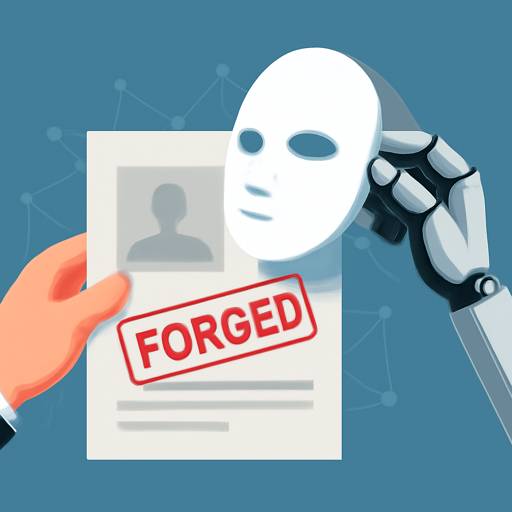
In a world where AI technology is reshaping how we interact, create, and secure data, the stakes for authenticity and trust have never been higher. With the advent of deep fakes and the ease of document manipulation, it’s crucial for businesses to partner with experts who understand not only how to detect these forgeries but also how to anticipate the evolving strategies of fraudsters.
The evolving threat landscape: how fraudsters exploit AI and document manipulation
Document fraud is no longer limited to simple photocopying or obvious alterations. Modern attackers combine machine learning, image editing software, and social engineering to produce highly convincing falsified documents that can deceive both humans and traditional automated systems. The result is a landscape in which identity verification, regulatory compliance, and transactional trust are under continuous pressure. Fraudsters exploit weaknesses across the document lifecycle: compromised templates, synthetic identities, altered metadata, and forged signatures. These tactics can undermine onboarding, lending, insurance claims, and legal workflows.
Understanding this landscape requires recognizing the speed at which tools for forgery improve. Generative models can synthesize realistic ID photos, recreate handwriting styles, and reconstruct document textures that mimic genuine materials. Meanwhile, adversaries test and refine their techniques against common detection systems, learning to bypass watermark checks or degrade features that detectors rely on. Organizations therefore face a dual challenge: detecting current forms of fraud and anticipating next-generation manipulations. The right approach combines threat intelligence with adaptive detection systems that learn from new fraud samples and behavioral anomalies.
Equally important is considering human factors. Social engineering remains a potent multiplier for technical attacks: convincing customer service agents or internal approvers to accept a forged document can be easier than breaking a detection model. Robust defenses require layered controls—technical detection, process hardening, staff training, and policy enforcement—to reduce the probability that any single forged document leads to material loss. Emphasizing continuous monitoring and rapid response reduces dwell time when a fraudulent document does enter systems, limiting both financial and reputational damage.
Technology and techniques for reliable detection
Advanced document fraud detection solutions blend multiple analytical techniques to achieve high precision and low false-positive rates. At the core are image forensics and metadata analysis: examining pixel-level inconsistencies, compression artifacts, and file histories to spot manipulations. Optical character recognition (OCR) combined with natural language processing (NLP) extracts textual features and checks for improbable content, formatting anomalies, or mismatches between visual and textual layers. Biometric checks, including facial recognition and liveness testing, validate that a claimed identity matches the person presenting the document.
Machine learning models trained on diverse datasets are essential, but performance hinges on continuous retraining and robust feature engineering. Ensemble approaches—where multiple specialized models evaluate different aspects of a document—reduce single-point failure modes. For example, one model might focus on font inconsistencies while another analyzes edge artifacts from digital editing. Rules-based layers add interpretability for compliance teams, allowing human reviewers to understand why a document was flagged. Integration with threat intelligence feeds enables detectors to recognize known fraudulent templates, stolen identity patterns, or coordinated attack campaigns.
Practical deployment also demands scalable automation and smooth human-in-the-loop workflows. Automated triage using scoring thresholds routes high-confidence forgeries to blocking actions and sends borderline cases to expert reviewers. Logging, audit trails, and explainability features support regulatory requirements and dispute resolution. To bridge technology and operations, many organizations adopt commercial platforms that combine detection capabilities with API-driven integration into onboarding, payments, and claims processes—for instance, adopting a document fraud detection tool that centralizes analysis and reporting. Security teams should evaluate vendors on dataset diversity, transparency of model behavior, and the ability to customize rules for industry-specific fraud patterns.
Case studies and proactive strategies for organizations
Real-world examples illustrate how layered defenses reduce risk. A mid-size financial institution facing a spike in synthetic ID fraud layered biometric liveness checks with document texture analysis and cut off fraudulent onboarding within days; the combination of automated scoring and rapid manual review reduced false accepts by over 80%. In another case, an insurance provider detected coordinated claims fraud by correlating document anomalies across unrelated claims—metadata patterns and reused images revealed a single actor filing multiple falsified submissions. These cases highlight the value of cross-system correlation and centralized logging to expose widespread schemes that single-case reviews miss.
Proactive strategies include building a feedback loop between detection systems and incident response. When a suspicious document is flagged, capture and catalog details—file hashes, editing fingerprints, and behavioral context—so that models and rules can be updated quickly. Conduct tabletop exercises that simulate social engineering scenarios tied to document misuse, and train frontline staff to spot subtle cues: irregular fonts, mismatched seals, or unusual submission channels. Partnerships with external specialists can provide access to broader fraud intelligence and model improvements that are hard to achieve internally.
Governance and policy matter as much as technology. Maintain clear thresholds for escalation, preserve chain-of-custody for contested documents, and ensure privacy-preserving handling of biometric or identity data. Regularly review vendor contracts to confirm transparency about training data and model updates. Finally, cultivate an organizational mindset that anticipates change: as generative tools become more capable, sustained investment in adaptive detection, cross-team collaboration, and incident readiness will determine whether an organization stays ahead of fraudsters or becomes their next target.






 SantosJGardner

+ There are no comments
Add yours