Regain Independence and Safety: Why a Sit-to-Stand Lift Belongs in Your Home
SantosJGardner Posted on
Caring for a loved one at home often involves navigating the physical challenges of transfers—moving someone from a chair to a bed, from a bed to a toilet, or simply helping them stand after a long rest. For many, these moments are not just exhausting but also carry a high risk of injury for both the caregiver and the patient. A mobility device designed for partial weight-bearing individuals offers a practical solution. This equipment bridges the gap between total dependence and full autonomy, allowing patients to use their own strength while receiving the stable, controlled support they need. When integrated into a home environment, such a device can dramatically reduce strain, prevent falls, and restore dignity to daily routines.
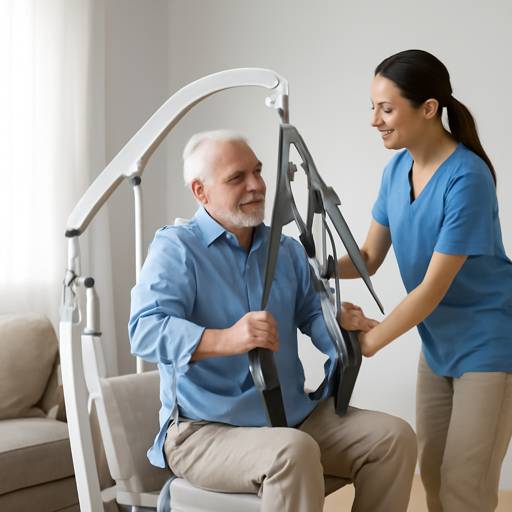
The concept is straightforward: the patient sits on a padded sling or seat, places their feet on a platform, and uses their own leg muscles to rise with the assistance of a powered or manual lifting mechanism. Unlike a full-body lift, this method engages the patient’s core and lower body strength, which is essential for rehabilitation and maintaining muscle tone. Caregivers no longer have to bend, twist, or bear the full weight of another person. Instead, they guide the movement with minimal physical effort, making the transfer safer and more predictable. This shift in dynamics is why more families are exploring a sit to stand lift for home use as a cornerstone of their caregiving toolkit.
Understanding the Sit-to-Stand Lift and Its Role in Home Care
A sit-to-stand lift is not just another piece of medical equipment; it is a carefully engineered device that respects the natural mechanics of the human body. Designed for individuals who can bear at least partial weight on their legs and have some upper body strength, this lift enables a standing transfer that mirrors the motion of rising from a chair. The key components include a stable base with casters, a vertical mast, a knee pad for stability, and a sling or vest that wraps around the patient’s back and under the arms. Some models are manual, operated by a hydraulic pump, while others are powered by rechargeable batteries. For home use, portability, ease of storage, and quiet operation become paramount.
The medical logic behind these lifts is rooted in fall prevention and caregiver ergonomics. According to occupational therapy research, the standing pivot transfer is one of the highest-risk activities for both parties. A sudden loss of balance or an unexpected movement can lead to a fall that results in fractures, head injuries, or long-term immobility. A sit-to-stand lift eliminates most of that risk by providing a secure anchor point and a controlled speed of movement. The caregiver remains in a comfortable upright posture, directing the lift with a simple hand control or lever, while the patient feels the security of the knee pad and sling. Over time, consistent use helps maintain joint flexibility and circulation, which are critical for individuals recovering from surgery, stroke, or general deconditioning.
One of the most common misconceptions is that these lifts are only for nursing homes or hospitals. In reality, the home care environment often presents unique obstacles—narrow doorways, uneven flooring, and limited storage space. Many modern home-oriented models address these issues with lightweight aluminum frames, foldable designs, and narrow bases that fit through standard doorways. Weight capacity typically ranges from 250 to 500 pounds, accommodating a variety of body types. Additionally, the slings are washable and available in different sizes to ensure comfort. For families looking to transition a loved one from hospital to home, having access to a reliable sit to stand lift for home use can mean the difference between a successful recovery and a series of setbacks caused by unsafe transfers.
Using the lift correctly involves a short learning curve. The patient must be able to sit on the edge of a bed or chair with feet flat on the floor. The knee pad is positioned against their shins, and the sling is placed behind their back and around the shoulders. As the lift engages, the patient is gently pulled forward and upward into a standing position. The caregiver can then pivot the patient toward the destination—a wheelchair, toilet, or another chair—and lower them gradually. This controlled motion prevents the “free fall” sensation that can cause panic and resistance. For anyone who has struggled with bed-to-chair transfers, the difference is immediately apparent: less fear, less pain, and a greater sense of accomplishment.
Key Features to Evaluate When Choosing a Home Lift
Not all sit-to-stand lifts are created equal, and selecting the right model for a home environment requires careful consideration of several factors. First and foremost is the patient’s weight and physical condition. While most lifts advertise a maximum capacity, it is wise to choose a model that offers a comfortable margin above the patient’s actual weight to ensure smooth operation over time. Next, consider the lift’s footprint. A home lift must be able to maneuver around furniture, through doorways, and into bathrooms. A base that opens and closes—sometimes called a “spreadable base”—allows the lift to straddle a toilet or chair while still being narrow enough to roll through standard 32-inch doors.
The power source is another pivotal decision. Electric lifts run on rechargeable batteries, offering hands-free raising and lowering with a remote or pendant control. They are ideal for caregivers who may have limited physical strength or for patients who require frequent repositioning throughout the day. Manual hydraulic lifts, on the other hand, are quieter, lighter, and less expensive, but they require the caregiver to pump a handle to raise the patient. This can become tiring during multiple transfers. For home use, many experts recommend a battery-powered model with a backup manual override for emergencies. Battery life should be evaluated based on typical usage—a unit that lasts through 10 to 15 full transfers per charge is generally sufficient for a single-patient household.
Comfort and safety features should never be overlooked. Look for a lift with a contoured knee pad that does not dig into the shins, as well as a sling that distributes pressure evenly across the back and shoulders. Quick-release mechanisms allow the sling to be detached easily for cleaning, which is essential for hygiene. The wheels should lock in place during transfers to prevent unintended rolling, and some models include anti-tip stabilizers for added security. Additionally, check the lifting range: the device must be able to lift from low surfaces like a standard bed (roughly 16 inches) and reach high surfaces like a wheelchair seat (about 20 inches). A versatile lift will accommodate these variations without straining the mechanism.
Finally, consider the warranty and after-sale support. Home medical equipment is an investment, and a lift that comes with a comprehensive warranty—covering the frame, motor, and battery for at least two years—provides peace of mind. Some manufacturers also offer rental options for short-term needs, such as post-surgery recovery. Reading user reviews from other caregivers can reveal practical insights about noise levels, ease of steering, and how well the lift fits into small bathrooms or cluttered bedrooms. Ultimately, the best lift is the one that encourages consistent use, because even the most advanced device is useless if it is too cumbersome to deploy. A thoughtfully chosen lift can transform a caregiver’s daily burden into a manageable routine.
Real-World Applications and Success Stories
To truly understand the impact of a sit-to-stand lift in a home setting, it helps to examine specific scenarios where the device has made a tangible difference. Consider the case of a 72-year-old man recovering from a hip replacement. In the first weeks after surgery, his surgeon strictly limited weight-bearing on the operated leg. His wife, who is 68 and has mild arthritis in her back, was tasked with helping him stand from the recliner to use a walker. Without a lift, she had to bear most of his weight, leading to sharp pain in her lower back after just a few days. A visiting physical therapist recommended a portable sit-to-stand lift. Within a week, the husband was able to stand with minimal assistance from the device, the wife reported no back pain, and the recovery timeline actually improved because the patient was more willing to attempt transfers.
Another powerful example involves a young adult with multiple sclerosis who experiences fluctuating muscle weakness. On good days, she can stand independently; on bad days, her legs give out unexpectedly. Her parents installed a sit-to-stand lift in the bathroom to allow her to use the toilet safely. Instead of waiting for someone to help during an emergency, she now transfers herself using the lift’s sling and knee pad. This autonomy has had a profound effect on her mental health, reducing feelings of helplessness. The lift, which is kept in a corner when not in use, has become an invisible safety net that her family no longer feels the urgency to hover over her every moment. It is a classic example of how proper equipment can restore independence while still providing the necessary physical support.
In a long-term care scenario, an 85-year-old woman with Parkinson’s disease lived with her daughter and son-in-law. The disease had affected her balance and made standing from a seated position unpredictable. The family initially tried a standard transfer belt, but the daughter quickly developed tendinitis in her shoulders from repeatedly lifting and pivoting her mother. After researching options, they acquired a battery-operated sit-to-stand lift. Not only did the daughter’s pain disappear, but the mother’s confidence grew. She began participating in standing exercises during physical therapy because the lift allowed her to practice without fear of falling. The physical therapist noted that the consistent standing transfers helped slow the progression of muscle atrophy, which is a common complication in Parkinson’s. The family now uses the lift for every transfer, including moving from the bed to the wheelchair and from the wheelchair to the commode.
These real-world stories underscore a crucial point: the right equipment does more than just move a person from point A to point B. It preserves relationships by removing physical strain from caregiving, and it preserves the patient’s dignity by enabling them to participate actively in the process. While every home situation is unique, the common thread is that a well-chosen sit-to-stand lift addresses the most dangerous and exhausting aspect of home care. For families facing the decision of whether to institutionalize a loved one, having such a device can tip the scales toward keeping them at home longer. It is not a cure-all, but it is a powerful tool that can make daily caregiving sustainable, safe, and even rewarding.




 SantosJGardner